
BEYOND ECO MATERIALS HOW SUSTAINABILITY IS CHANGING FOOTWEAR IN 2026

Nearshoring is changing where footwear is produced. The next shift is changing how footwear is designed, made and what it is made from.
Sustainability in footwear is moving beyond the simple choice of recycled or “eco” materials. New bio-based materials, circular solutions, waste valorization and more responsible production processes are creating a much broader approach to sustainable footwear.
For brands, this means looking beyond the material itself and considering the entire journey of a product — from raw materials and manufacturing to durability, traceability and end of life.
The question is no longer simply “Which eco material should we use?”
It is becoming:
“How can we rethink the entire product to make it more responsible, without compromising performance, quality or scale?”
1. From Recycled to Bio-Based Materials
The footwear industry is increasingly exploring materials derived from renewable biological resources, agricultural by-products and other alternative sources.
These materials can help reduce dependence on fossil-based resources while creating new possibilities for footwear design.
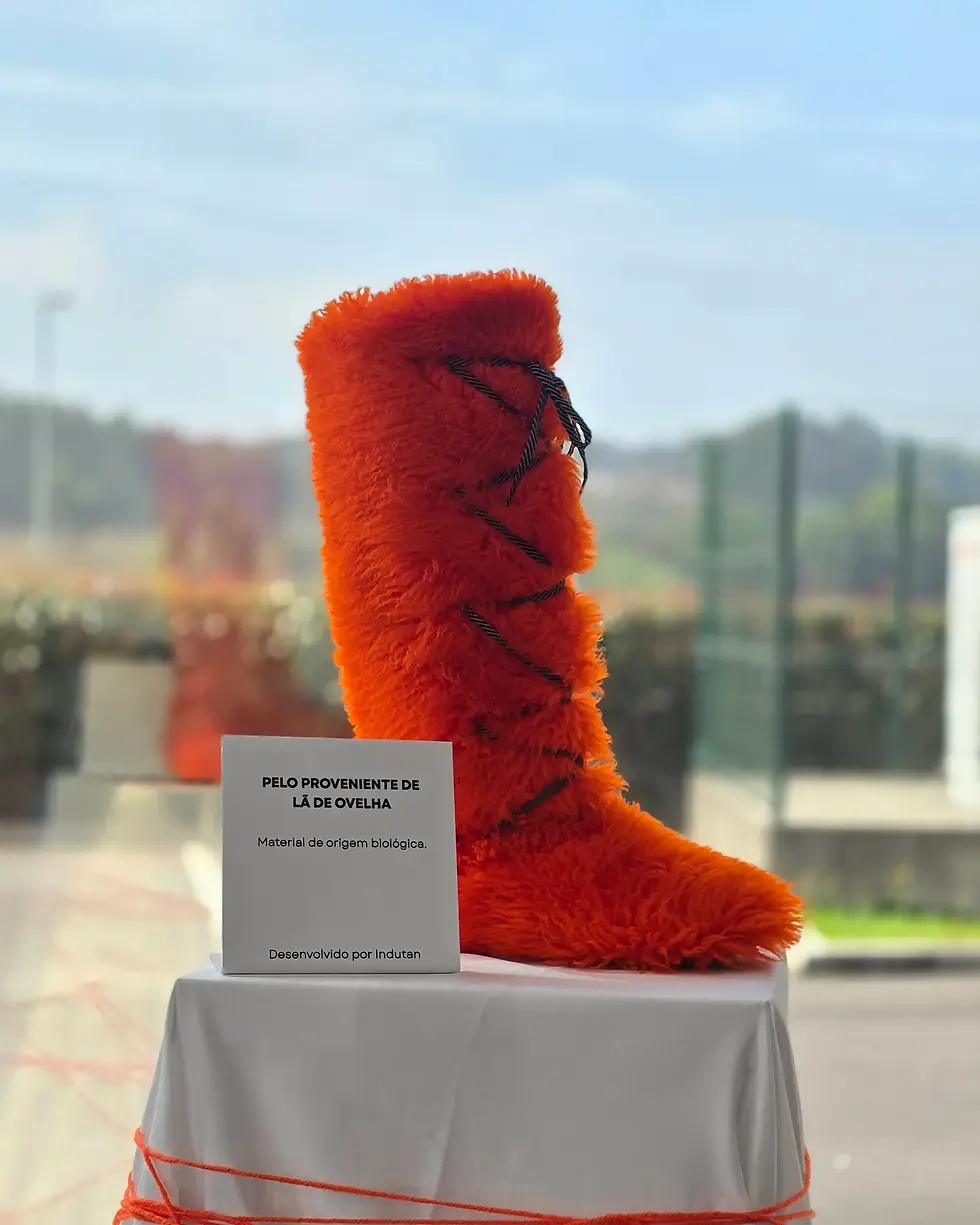
The BioShoes4All project is a strong example of this transformation. The Portuguese initiative brought together 69 partners from across the footwear value chain to develop new biomaterials, bio-leathers, biocomposites, components and production processes.

The important shift is that there is no single “sustainable material” for every shoe.
Different products require different solutions from flexibility and durability to comfort, aesthetics and performance.
The future will be about choosing the right material for the right product.
2. Turning Waste Into Resources
Sustainability is also about what happens to materials before, during and after production.
Footwear manufacturing generates waste throughout the production process. The circular economy approach looks at this waste differently: instead of treating it as an end point, it can become a resource for new products and components.
Projects such as BioShoes4All are exploring ways to valorise both production and post-consumer waste, while reducing the sector's carbon, water, chemical and fossil-resource footprint.
For brands, this means sustainability can become more than a communication message.
It can become part of how products are designed and manufactured.
3. The Manufacturer Becomes Part of the Innovation
Introducing new materials into footwear is not simply a matter of replacing one material with another.
A material needs to perform consistently, work with existing manufacturing processes and ultimately be scalable.
This makes the manufacturing partner increasingly important.
Brands should be asking:
Can the manufacturer work with innovative and bio-based materials?
Can new materials be tested and validated?
Can production waste be recovered or valorised?
Can the solution be scaled from prototype to industrial production?
Can material origin and production processes be properly traced?

The manufacturers of the future will not simply produce the shoe.
They will help develop better shoes from the start.
4. Portugal: From Innovation to Industrial Scale
Portugal has a strong position in this transition thanks to its highly integrated footwear ecosystem.
Manufacturers, component suppliers, material companies, technology centres and research institutions work within a relatively compact industrial network.
BioShoes4All demonstrated the potential of this model, bringing together companies and research organisations to develop more than 200 scientific, technological and industrial outcomes.
This proximity makes it easier to move from research → material → prototype → production.

For international brands, this means access to an ecosystem where sustainable innovation can move more quickly towards commercial reality.

Image 5: BioShoes4All exhibition at Rodiro headquarters
The future of sustainable footwear will not be defined by one material or one technology.
The future of sustainable footwear goes beyond eco materials. It is about combining better materials, smarter processes, circular thinking and responsible manufacturing to create products with a lower environmental impact without compromising quality or performance.
At Rodiro, we help international brands turn innovative materials and ideas into footwear that is ready for the market, combining sustainability, flexibility and industrial expertise.
Have a new material, product or collection in mind? Let's build it together.
Discover Rodiro and explore our manufacturing capabilities → www.rodiro.com
Follow Us on Social Media for Latest


Comments